The Perfect Morning Ritual Is a Moving Target
A flexible morning ritual gives you a simple way to begin, even when sleep, schedules or household needs change, without turning calm into another task.
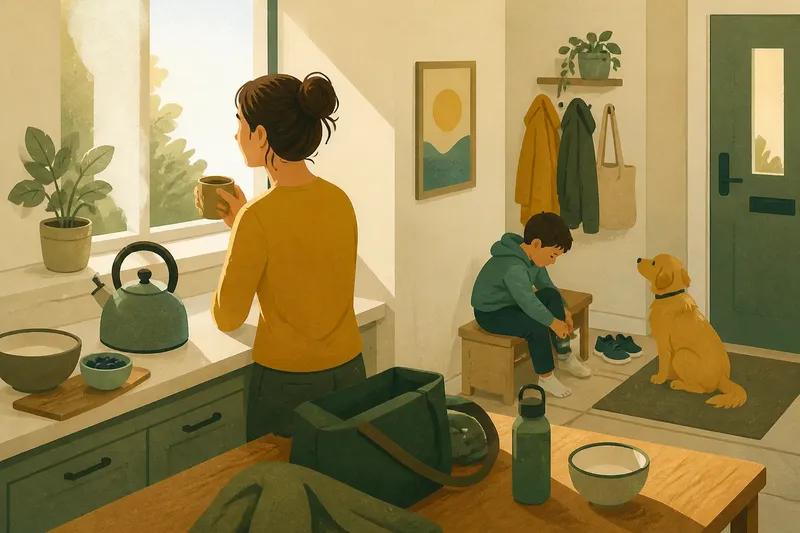
The kettle clicks off as you reach for a lunch box, and the quiet morning you pictured gives way to the school run. A flexible morning ritual can still have a place here: not as a sequence to protect, but as a small way to notice what the day is asking of you.
The useful distinction is between a cue and a routine. A routine depends on several actions happening in order; a cue is one moment of attention that can sit inside different kinds of mornings. That makes it easier to keep the ritual’s purpose while changing its form.
A morning cue works best when it belongs to an existing task
Some morning routines ask for a protected stretch: make tea, write a page, stretch, read, then get dressed. On a day with an early appointment or a child who needs help, those actions compete with practical tasks. The ritual can start to feel like a debt to repay before the day is allowed to begin.
Instead, connect the cue to something that is already happening. You might notice the first light on the kitchen counter while filling the kettle, or pause for one breath as you put on your shoes. Neither action requires a separate slot, and neither depends on completing a longer sequence.
To choose a cue, ask what you want to notice: the day beginning, your body waking, or the first task ahead. Then attach that intention to an ordinary action you control. If the action repeatedly makes you hurry, choose another; the cue should fit the task rather than compete with it.
A missed morning does not need a reset
Travel, poor sleep, illness and caring responsibilities can all disrupt a familiar morning. A ritual tied to one room or object may not be available elsewhere, but that does not mean the practice has been lost or needs to be restarted.
Keep the purpose in mind and let the setting change. If the ritual is a moment of orientation, it might happen while sitting up in a guest room, rather than beside the journal kept at home. If no suitable moment appears, leave it alone and pick it up again when it feels useful.
Say you usually open the kitchen curtains to mark the start of the day, but you are staying somewhere without reachable curtains. You turn towards the window while sitting up instead. The observable result is a brief moment to orient yourself; the action is different, but the purpose remains. If that moment feels awkward, you can skip it rather than searching for a substitute.
Household needs can shape the ritual
A shared home may offer no quiet corner or uninterrupted cup of tea. Someone needs breakfast, a pet waits at the door, or another person is getting ready in the same small space. Protecting a private routine at any cost can add friction to a morning already full of demands.
Look for a cue that can happen alongside the household’s ordinary activity. Notice the light on the counter while setting out bowls, or take one unhurried sip after everyone has what they need. It need not be silent, secluded or visible to anyone else.
A cue that relies on another person’s behaviour is less dependable. You cannot control whether someone wakes early or leaves the kitchen free, so avoid making their actions a condition of your ritual. Choose a moment within your reach, and let the household carry on.
When is a morning ritual helping rather than adding pressure?
How small should a morning cue be?
Choose one ordinary action, such as opening a window, setting down a bag or pouring water. It should need no preparation and remain possible when the morning is busy.
Does the cue need to happen at the same time?
No. You can link it to an event rather than a clock time, such as the kettle starting or putting on your shoes. Keep the purpose consistent even if the occasion changes.
What if the cue feels forced?
Stop using it or connect the intention to a more natural action. A ritual is not something you need to preserve once it has become another chore.
How can I tell if the ritual still suits me?
Notice whether it gives you a moment to orient yourself or makes you hurry and assess your performance. Let that observation guide whether you adjust the cue or set it aside.
Changes in your morning may call for a different purpose
Work hours, seasons, health and family arrangements all alter the shape of a morning. A cue that once suited you can become awkward without having been a mistake. Ask whether it still serves the day you have now, rather than whether you can preserve the old version.
Sometimes the action changes while the intention stays. A quiet pause may no longer fit, but noticing the first household task could offer the same sense of orientation. At another point, you may want steadiness rather than quiet; the cue can reflect that shift.
Not every unsuitable ritual needs a replacement. What is not worth the effort is building a detailed menu of alternatives for every possible morning. A few words about what you want the cue to help you notice are enough to make a choice when circumstances change.
A simple decision check keeps the ritual grounded
Use these observations to decide whether to keep, change or pause a morning cue. Each one leads to a practical alternative rather than a demand to make the ritual work at all costs.
- Check whether the cue uses an action already in your morning. If it does, keep it; if it needs a separate appointment in your schedule, attach it to an existing task instead.
- Check whether you can do it without another person changing their plans. If you can, keep the cue; if you cannot, choose a moment that depends only on your own action.
- Check whether the needed object or place is available. If it is, use it; if it is not, adapt the action to the setting or skip the cue for that morning.
- Check whether the cue leaves you more hurried or self-critical. If it does, stop tracking it and try a simpler action; if it does not, keep it without adding a score.
- Check whether the action still serves the purpose you chose. If it does, retain it; if the purpose has changed, choose a cue that better matches what the morning now needs.
- Check whether you are making a backup plan for situations that rarely arise. If you are, remove the extra branches and keep one straightforward alternative; if you are not, leave the cue uncomplicated.
A worked morning shows how the choice can change
Imagine a parent whose usual cue is to write one line in a notebook at the kitchen table after making tea. In this invented situation, the starting conditions are a child who needs help getting dressed, a kettle already boiling and no clear stretch of time alone.
First, the parent identifies the purpose of the notebook line: to notice what matters before the day fills up. Next, they check what is already happening and choose the moment they fill a water bottle for the school bag. They pause to name the morning’s main concern, then carry on without opening the notebook.
The observable result is that the parent has taken a moment to orient themselves without delaying breakfast or needing quiet. The trade-off is that they do not keep a written record that morning. If having a record matters more on another day, they can return to the notebook when it fits; the cue does not have to serve every purpose at once.
Let the cue meet the morning you have
A flexible morning ritual is not a compressed version of an ideal routine. It is a small choice that can fit different circumstances without requiring the same sequence each time. The action may be opening the curtains, feeling a warm mug in your hands or noticing the first task before you begin it.
When choosing a flexible morning ritual, ask whether its cue fits an ordinary morning as well as an easy one. If the answer changes with the day, let the action change too. A cue can help you begin without asking the morning to become something else.