Why a Pause Can Make a Moment Easier to Notice
A pause can make a moment easier to notice by helping you distinguish one activity from the next, without requiring calm or a new daily routine.
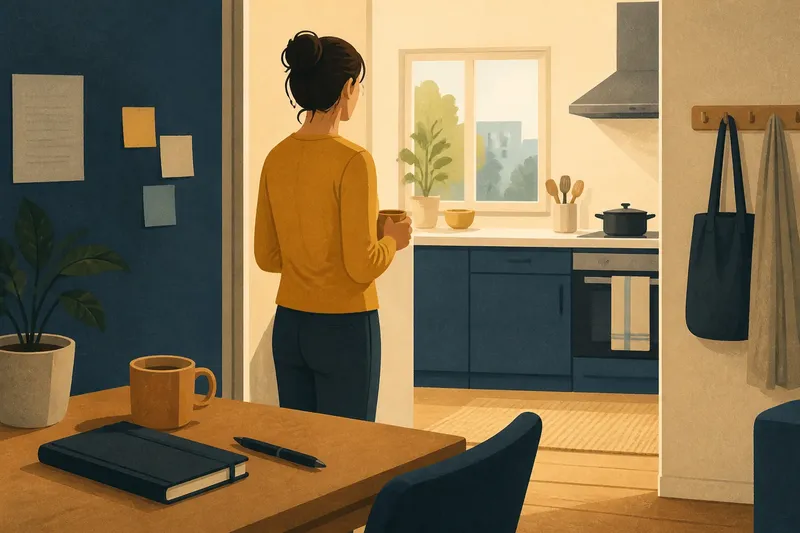
You close the laptop, but your thoughts keep arranging tomorrow’s work as you walk towards the kitchen. A pause between tasks can make the transition easier to notice, not by clearing your mind, but by changing how you meet the next few moments.
There are different ways to make that interval distinct. You can leave it open, add a small physical marker, or take in the surroundings without choosing a single focal point. The useful question is which approach fits the moment, rather than which one is best in general.
An open pause leaves the moment unstructured
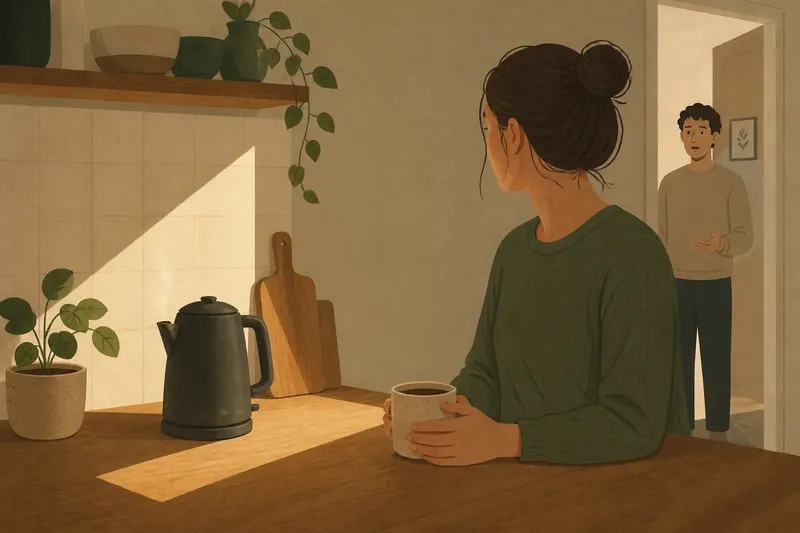
With an open pause, you stop before moving on and do not assign yourself anything to observe. The office can remain noisy, the kitchen untidy, and your thoughts unfinished. You are not trying to make the interval empty; you are simply not directing it.
This can suit a moment when instructions would feel like extra work. It can also be hard to recognise as a pause if you continue straight into planning or reaching for the next task. If that happens, a visible change in what you are doing may help mark the boundary.
A lightly shaped pause uses one ordinary action
A lightly shaped pause has a simple cue: put down the pen, close the notebook, or set your mug on the table before starting something else. The action gives the interval a beginning without requiring a special object or a set routine.
The cue is useful only while it remains easy. If you start worrying about remembering it or doing it correctly, leave it aside. A closed notebook is not a signal that you must feel settled; it is just a clear change from writing to whatever comes next.
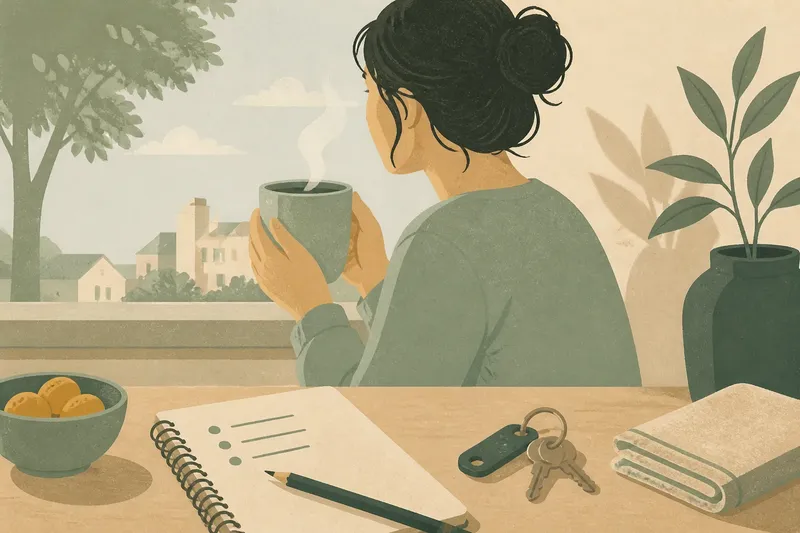
A third option is to let the setting come into view without selecting one detail in advance. You might stand near a doorway and notice the light on the wall, movement outside, or the general activity in the room. This offers some orientation without turning the pause into a focused observation exercise.
Choose a pause that fits the place and activity
A quiet room may make an open pause easy to recognise. In a busy office, closing a notebook can mark the end of a piece of work. In a public place, it may be more sensible to remain aware of people and movement than to close your eyes or turn away from your surroundings.
The same person can make different choices at different transitions. After a difficult conversation, a physical cue may help separate it from the next task. Before a familiar chore, stopping briefly without any added structure may be enough. If you are tired, doing nothing more than noticing that one activity has ended can be the least demanding option.
It is not worth finding a perfect location, setting a timer, or arranging the room for a small interval. Those preparations can make a pause feel like another project. Choose a place where you can safely stop without neglecting something that needs your attention.
Use a small observation to decide what comes next
If you want to notice something, keep the question simple: what has changed since the last activity? You might notice a sound, a thought that keeps returning, or that your hands are still holding what you have just finished using. You might not notice anything distinct, and there is no need to turn that into a verdict.
Say you have finished sorting the post and are about to cook. You put the last envelope down, then pause with your hands free. You notice the extractor fan and remember an unanswered message; the practical result is not a conclusion about your mood, but a choice about what to do next. If the message needs attention now, you can handle it; if not, you can begin cooking and return to it later.
Noticing does not require interpretation. A tight jaw need not become a problem to solve, and a passing concern need not take over the interval. The pause can help you see whether you are ready to continue, need to finish one small thing, or would rather leave the next task for later.
Which kind of pause fits this moment?
How long should a pause last?
Long enough for you to distinguish it from the activity before or after it. There is no required duration, and counting can become an unnecessary task.
What if I do not feel calmer afterwards?
Calm is not the measure of whether the interval was useful. You may have noticed a sound, an unfinished thought, or your readiness to move on while feeling much as you did before.
Should I use the same approach each time?
No. An open pause may suit a familiar transition, while a physical cue can make a less clear boundary easier to recognise. Change approaches when one starts to feel cumbersome.
What if something uncomfortable comes to mind?
You do not have to investigate it during the pause. You can return to the next ordinary activity, or seek appropriate support if the concern needs more attention than a brief interval can offer.
Let the approach change with the moment
Before moving on, consider whether more structure would make the boundary clearer or merely add a task. If instructions feel intrusive, leave the pause open. If one activity is spilling into another, use an ordinary action such as closing a notebook. If you need a little orientation, let the surroundings come into view without demanding that any detail matter.
The distinction between open and lightly shaped pauses is practical, not a rule to follow. A pause can make a moment easier to notice when it fits the transition at hand; the next time you reach ahead automatically, leave a small space and choose the simplest way to mark it.